
About Us
Independent. Licensed. Accountable.
An independent engineering firm
We aren't tied to any equipment supplier or product line. Nothing we recommend earns us a commission, so the system you get is the one the site calls for, not the one someone pays us to specify. If a repair will do, we'll say so. If it won't, we'll tell you that too.
P.Eng. on every file
Every inspection, maintenance report, design drawing, and compliance letter is reviewed by a licensed Professional Engineer registered with Engineers and Geoscientists BC (EGBC). That review means accountability, professional standards, and legal protection for you.
Complete documentation
We handle health authority submissions, compliance reports, Letters of Assurance, maintenance records, and permit applications. You get a complete report for your property that matters enormously at sale, refinancing, or permit application time.
How we work
Assessments based on what's on the site, not on assumptions
Recommendations sized to real conditions, that you can act on
Clear communication with owners, installers and project partners
Work planned properly before anyone breaks ground
We take the time to explain what we found, what the options are, and what happens next.
Service Area

Sea to Sky & Pemberton Valley
Including Lions Bay, Furry Creek, Paradise Valley, Squamish Valley, Pemberton, Pemberton Meadows, Mount Currie, Birken, D'Arcy, Anderson Lake

Sunshine Coast & Howe Sound Islands
Including Gibsons, Roberts Creek, Sechelt, Halfmoon Bay, Pender Harbour, Egmont, Bowen Island, Gambier Island, Keats Island

Lower Mainland & Fraser Valley
Including Maple Ridge, Mission, Abbotsford, Chilliwack, Agassiz, Harrison Hot Springs, Hope, rural Langley
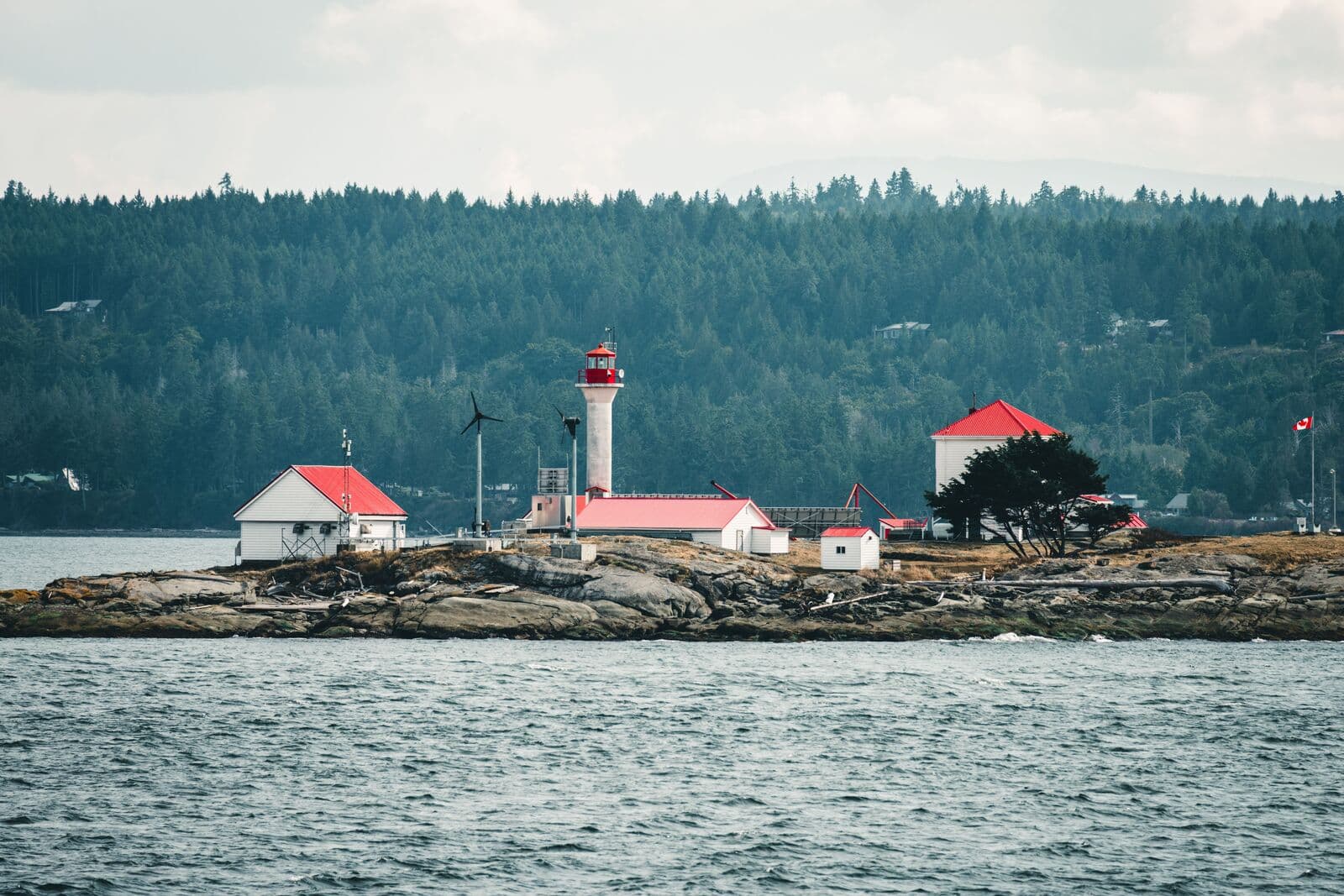
Vancouver Island
Including Sooke, Greater Victoria, Duncan, Cowichan Valley, Nanaimo, Parksville

Interior & Northern BC
Including Lillooet, Bralorne, Gold Bridge, Gun Lake, Lytton, Cache Creek, Ashcroft, Clinton, Merritt, Logan Lake, Kamloops
Not sure if we cover your area? Get in touch. Still working out what you need? See what we do.
Credentials
Engineers and Geoscientists British Columbia (EGBC)
Registered Professional Engineer.
BC Water & Waste Association (BCWWA)
Backflow and cross connection control.
Regulations we work under
- Sewerage System Regulation (SSR)
- Municipal Wastewater Regulation (MWR)
Frequently asked questions
Common questions about engineering an onsite wastewater system in British Columbia, and about working with us.
What type of projects does Black Dog work on?
We are fortunate that we’re able to work on all types of wastewater projects from small individual property systems from home owners, up to and including large facility level systems for commercial clients. Our pricing is competitive and all of our projects are provided the same level of diligence from a professional.
What does a Professional Engineer do on a septic project that a ROWP doesn't?
In British Columbia, both Registered Onsite Wastewater Practitioners (ROWPs) and qualified Professionals can act as Authorized Persons for onsite sewerage systems. The appropriate professional depends on the type, size and complexity of the project.
A ROWP can plan, install and maintain Type 1 and Type 2 systems within the scope of their registration, including systems with a daily design flow below 9,100 litres.
A Professional Engineer can work with any and all systems however, must be involved where a project has significant site constraints, additional technical requirements, or requires engineering judgment beyond the scope of a ROWP's practice. This includes working with Type 3 systems and systems with design flows above 9,100 litres per day.
For larger or more complex projects, a Professional Engineer is responsible for engineering the system, preparing sealed plans, specifications, providing professional oversight during construction, commissioning the system, and providing a comprehensive maintenance package.
Black Dog Septic Engineering provides professional engineering services for onsite wastewater projects ranging from individual properties to larger and more complex systems.
When does a system have to be designed by an engineer?
Not every septic system in British Columbia needs a Professional Engineer (P.Eng.).
Many straightforward residential systems can be designed and managed by a Registered Onsite Wastewater Practitioner (ROWP). Professional engineering becomes more important when a property presents limited space, environmental constraints, or other site conditions that make a conventional system unsuitable.
Examples include:
- Small or tightly constrained properties where there is limited room for a suitable dispersal area;
- Shallow, difficult, or variable soils;
- High groundwater or limited separation from bedrock;
- Steep or complex terrain;
- Nearby wells, creeks, lakes, wetlands, or other water features;
- Limited setbacks from property lines, buildings, or other site features;
- Projects requiring advanced treatment or a Type 3 system;
- Larger or more complex commercial or multi-unit properties; or
- Projects where the wastewater characteristics or site conditions require engineering beyond a standard onsite wastewater system.
A Type 3 system is specifically a professional-supervision system under BC's Sewerage System Regulation and may be used where higher treatment performance is needed to address site or environmental constraints.
The 9,100 litre/day threshold is another regulatory trigger, but it is unlikely to be the deciding factor for most typical residential projects.
The important question is not simply how many bedrooms a property has, it's whether the site can safely accommodate the proposed wastewater system.
If you're unsure what your property requires, Black Dog can review the site constraints and proposed use and determine the appropriate design pathway before you invest in a full design.
How long does design and health authority filing usually take?
The timeline depends on the property, system size and complexity, site conditions, availability of existing information, and the requirements of the project.
For a straightforward project with readily available information and suitable site conditions, the design process may be relatively quick. More complex projects can take longer, particularly where additional site investigation, engineering, treatment-system selection, revisions, coordination with other professionals, or additional regulatory requirements are involved.
Once the design is ready, the Authorized Person submits the required Record of Sewerage System and supporting documents to the applicable health authority before construction begins. Health-authority filing procedures and processing times can vary by jurisdiction. For example, Vancouver Coastal Health states that its staff will contact the applicant within five business days after a filing is submitted to arrange payment, but this is not a guaranteed overall project or approval timeline.
The best way to get an accurate timeline is to provide the project details so we can assess the scope and identify any site or regulatory issues early.
What is a Letter of Certification and when do I need one?
A Letter of Certification (LOC) is a document submitted to the applicable health authority by the Authorized Person after construction of a sewerage system covered by the BC Sewerage System Regulation.
The LOC certifies that the Authorized Person has provided the owner with the filed plans and specifications and a maintenance plan, and that the system was constructed in accordance with standard practice and substantially in accordance with the plans and specifications filed with the health authority. The certification also addresses the system's expected domestic sewage flow and whether, when properly operated and maintained, the system will cause or contribute to a health hazard.
The Authorized Person must submit the Letter of Certification to the health authority within 30 days of completing construction. The LOC is accompanied by an as-constructed plan and maintenance plan, and the owner receives copies of the relevant documentation.
The Letter of Certification is therefore an important part of closing out a sewerage-system project and not simply a receipt or confirmation that construction occurred.
What information do you need to quote a project?
The more information we have at the beginning, the more accurately we can understand the scope of work and determine what information or site investigation may be required.
When contacting Black Dog, it is helpful to provide:
- Project location or civic address
- Type of property or proposed development
- Existing or proposed building use, including: number of bedrooms, occupants, units, future expansion plans, and other relevant occupancy information
- Existing septic or wastewater-system information, if unknown a filing can be pulled from local authority
- Site plan or survey, if available
- Information about wells, watercourses, lakes or other nearby features
- Known site constraints, such as steep slopes, limited available area or difficult access
- Project timeline
- Whether this is a new system, alteration, repair, replacement or expansion
For larger commercial or development projects, it is particularly helpful to provide any available architectural, civil, servicing, or development plans.
If you don't have all of this information, that's okay. Start with the property location, project description and what you're trying to accomplish, and we can help determine what is needed next.
What's the difference between Type 1, 2 and 3 systems?
In British Columbia, onsite sewerage systems are classified as Type 1, Type 2 or Type 3 based on the level of treatment achieved by the treatment method.
Type 1
Type 1 treatment is essentially treatment by a septic tank. The septic tank provides primary treatment by allowing solids to settle and separating solids and liquids before effluent is dispersed into the soil.
Type 2
Type 2 treatment provides a higher level of treatment than a conventional septic tank, prior to entering the dispersal field. Under the Sewerage System Regulation, Type 2 effluent must consistently contain less than:
- 45 mg/L total suspended solids
- 45 mg/L five-day biochemical oxygen demand (BOD₅)
Type 3
Type 3 treatment provides an even higher level of treatment prior to entering the dispersal field. Under the Regulation, Type 3 effluent must consistently contain less than:
- 10 mg/L total suspended solids
- 10 mg/L BOD₅
- 400 CFU/100 mL median fecal coliform density
Type 3 systems must be designed, constructed and maintained by or under the supervision of a Professional.